Basic principle
Thanks to embryology, genetics, ear innervation, and the physiology of the nervous system, all parts of the body are represented on the ear.
When a medical issue occurs, specific information travels along nerve pathways through the ear to the brain. This causes points to appear on the ear that are not normally present. These points are unique: they are painful to the touch and possess specific microscopic and electrical characteristics.
By treating these points, for example through needle puncture, the nerve pathways leading to the brain are disrupted. This stimulates the brain to trigger more effective therapeutic responses to resolve the issue within the body.

History
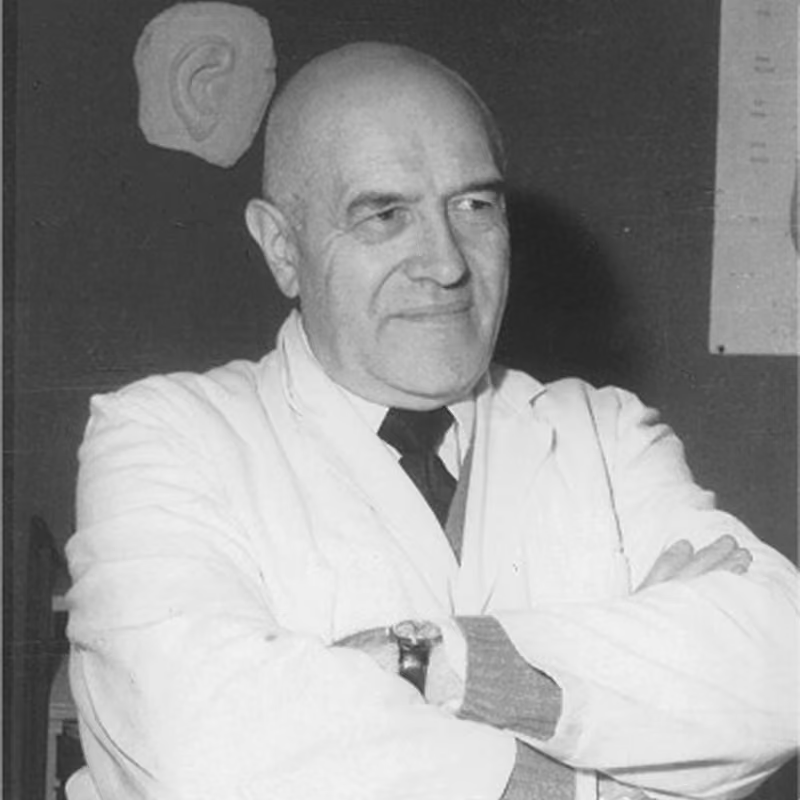
Auriculotherapy was developed by Dr. P. Nogier of Lyon (1908-1996).
In 1957, he published all the ear-based localizations. He is the founder of auriculotherapy and coined the term in 1956.
In 1987, auriculotherapy was officially recognized by the WHO (World Health Organization) as a medical technique.
In 2000, Dr. D. Alimi (University of Paris 13) proved the existence of ear localizations using functional MRI. He thus demonstrated the relationships between the peripheral body, the ear, and the brain.
What happens during a consultation?
First, it is important to make a correct diagnosis. It is therefore necessary for the auriculotherapist to be a physician. Only they can provide a diagnosis. Afterward, it must be determined whether the patient's illness or symptoms can be treated or helped by auriculotherapy.
There are several methods for detecting points on the ear:
- searching for painful points with a pressure probe
- using Dr. Nogier’s pulse reflex
- with an electrical detector
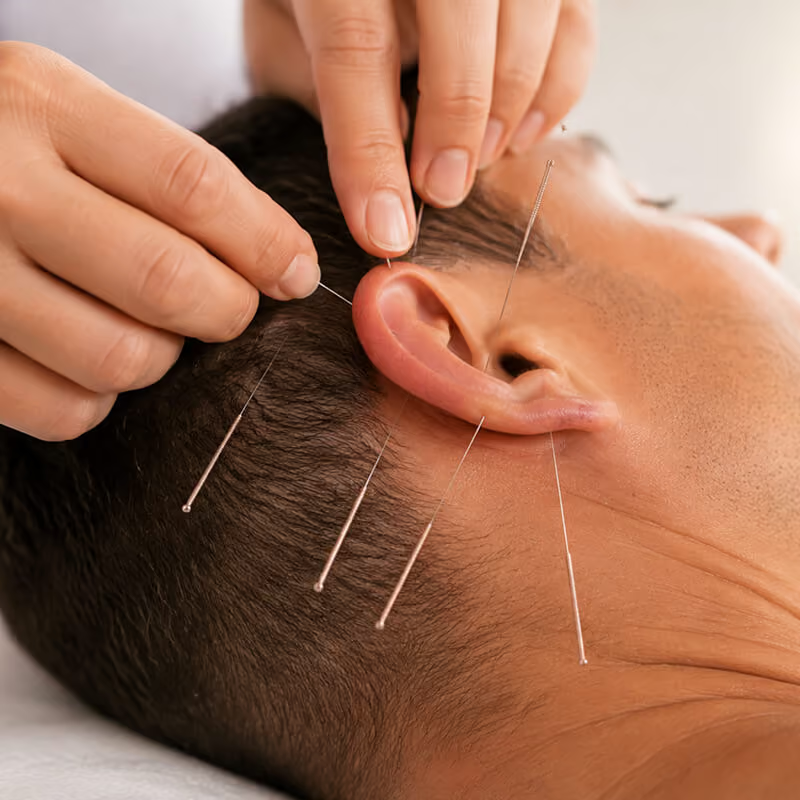
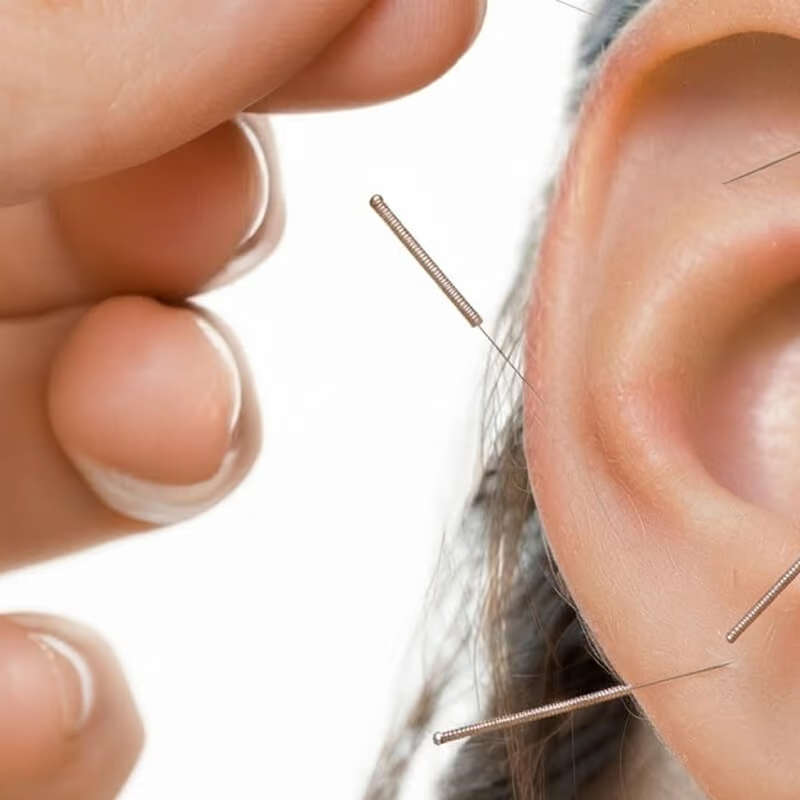
The identified points are treated using standard acupuncture needles (left in place for 20 to 30 minutes) or ASP needles (semi-permanent needles, 10-14 days), electrical impulses, cryotherapy, or laser beams.
Number of treatments
In most cases, there is a clear improvement after the first treatment. Please note: the day after treatment, you may experience a temporary flare-up of pain or symptoms.
The number of treatments depends on the severity of the condition and varies between 1 and 6. For incurable diseases or chronic issues, repeating the treatment can be very beneficial.
Auriculotherapy has very few side effects, such as slight, temporary pain at the treatment site. It is important to always use sterile, single-use equipment.
The reputation of auriculotherapy is due to its often immediate and spectacular results.
Frequently asked questions
Answers from ABMA physicians to the most frequently asked questions about medical acupuncture.
What is the difference between auriculotherapy and acupuncture?
Auriculotherapy, also known as auricular acupuncture, focuses on points located on the ear. Body acupuncture, by contrast, uses points distributed across different areas of the body.
Both approaches may form part of the practice of a physician trained in acupuncture. The choice of technique depends on the diagnosis, clinical situation and goal defined with the patient.
What happens during an auriculotherapy session?
The physician begins with a consultation and examination to clarify the symptoms, medical history, current treatments and diagnosis. The physician then determines whether auriculotherapy may have a role in the care plan.
Points on the ear are located and then stimulated using needles, electrical stimulation, cryotherapy or laser, depending on the technique chosen. Conventional needles are generally removed at the end of the session.
How are points on the ear located?
The physician may look for sensitive points using a pressure probe and/or an electrical detector that detects changes in skin resistance. Some practitioners also use the auriculo-cardiac reflex, also known as RAC or VAS.
Locating the points never replaces medical diagnosis. It takes place after the clinical assessment and helps guide the choice of areas that may be stimulated.
Can the needles remain in the ear after the consultation?
Yes. In certain situations, the physician may use small retained needles, better known as ASPs (semi-permanent needles). They remain in place temporarily and generally fall out on their own after several days.
The physician explains the precautions to follow and the signs that should prompt you to get back in touch, particularly significant pain, persistent redness, swelling or discharge at the treated point.
Deepen your understanding of medical auriculotherapy
Discover the links between auriculotherapy and medical acupuncture, as well as the medical acupuncturist's approach.
Explore the main indications for these approaches and consult the directory of medical acupuncturists who are members of the ABMA.


Find your auriculotherapist
View the list of auriculotherapy practitioners trained by the ABMA.