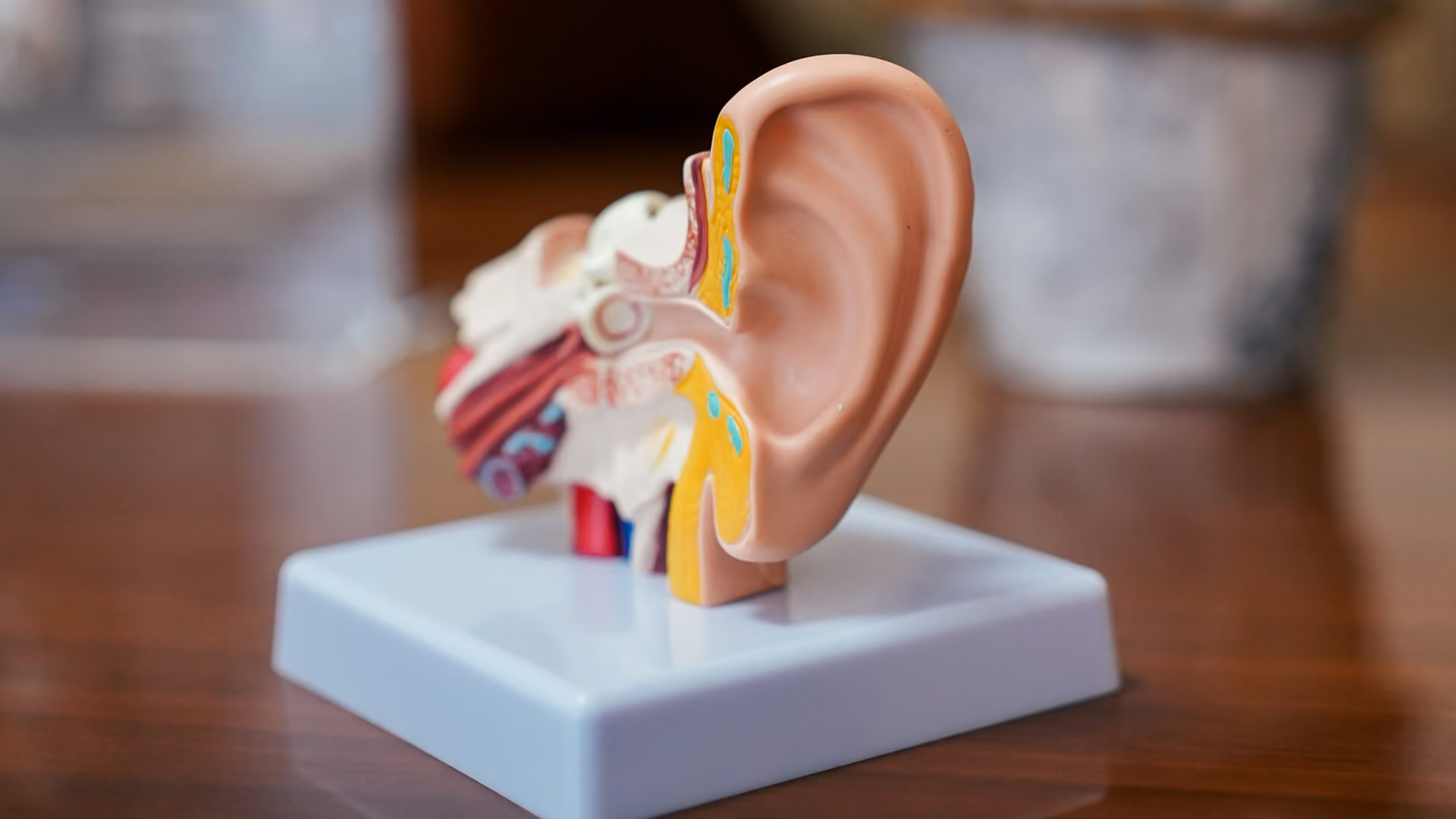
Understanding ENT, respiratory and sensory disorders
Rhinitis, sinusitis, tinnitus, dizziness, asthma, or taste and smell disorders correspond to very different diagnoses. Management depends on whether their origin is allergic, infectious, inflammatory, respiratory, auditory, vestibular or neurological.
Symptoms that may sometimes be urgent.
The physician reviews their onset, progression, triggers, treatments already tried and associated signs.
What is the role of acupuncture?
Acupuncture may be considered in certain cases of allergic rhinitis, nasal congestion and other ENT symptoms, as well as in some patients with tinnitus, dizziness or respiratory manifestations. Its relevance is assessed by the physician according to the diagnosis, the cause of the symptoms and their progression.
Management adapted to the diagnosis.
Acupuncture may be integrated with other therapeutic measures when necessary. The physician takes into account the identified cause, treatments already undertaken and the progression of symptoms.
In which situations may acupuncture be proposed?
The situations below illustrate different ENT, respiratory or sensory complaints for which acupuncture may be considered. The physician assesses its relevance according to the cause, associated symptoms and treatments already in place.
Allergic rhinitis and nasal congestion
In certain cases of allergic rhinitis or recurrent nasal congestion, acupuncture may be proposed to help reduce discomfort and certain symptoms. It may be combined with allergen avoidance measures and treatments required according to the situation.
Sinusitis and recurrent ENT problems
In cases of recurrent ENT problems or certain discomforts associated with sinusitis, acupuncture may be considered to help manage symptoms. At the same time, the physician looks for possible complications and adapts symptomatic treatment or antibiotics when indicated.
Tinnitus and dizziness
Tinnitus and dizziness can have very different causes. Following medical assessment, acupuncture may be proposed for some patients to help manage these symptoms and improve day-to-day comfort. Sudden hearing loss, neurological signs or rapid worsening, however, require urgent medical care.
Asthma and other respiratory symptoms
In some patients with recurrent respiratory symptoms, acupuncture may be considered as a complementary approach to help manage certain discomforts. In asthma, prescribed inhaled treatments remain essential, and significant breathing difficulty or failure of rescue treatment constitutes an emergency.
Taste and smell disorders
A change in taste or smell requires investigation of its cause. Depending on the context, acupuncture may be considered as a complementary approach for some patients, after medical assessment and according to how symptoms progress.
Questions fréquentes
Vous vous posez encore des questions ? Retrouvez les réponses aux interrogations les plus fréquentes concernant cette indication, le déroulement d'une consultation et la place de l'acupuncture dans une prise en charge médicale.
Can acupuncture replace treatment for asthma or allergies?
No. Acupuncture may be combined with prescribed treatments for asthma or allergies when indicated. In certain forms of allergic rhinitis, it may for example be proposed to help manage symptoms. In asthma, the prescribed medical treatment remains essential.
Can all forms of tinnitus or dizziness be treated with acupuncture?
No, because tinnitus and dizziness can have very different causes. Once a diagnosis has been made, acupuncture may be considered for some patients to help manage symptoms. ENT, neurological or vestibular assessment remains particularly important in cases of sudden hearing loss or neurological signs.
Is acupuncture proposed for sinusitis?
Acupuncture may be considered to help manage certain symptoms or discomfort associated with sinus problems, after medical assessment. Acute or chronic sinusitis, however, requires clarification of the cause and treatment adapted to the diagnosis.
How many sessions may be proposed?
The number and frequency of sessions are tailored to the diagnosis, the duration of the pain, the treatment goals, and the progress observed. The doctor regularly reviews the results to adjust the care plan and decide, in consultation with the patient, whether to continue or space out the sessions.
When should prompt medical attention be sought for ENT or respiratory symptoms?
Significant breathing difficulty, chest pain, sudden hearing loss, dizziness accompanied by neurological symptoms, high fever, a marked deterioration in general condition or any rapid worsening require urgent medical assessment. Acupuncture must never delay this care.
Can acupuncture be combined with another treatment?
Yes. Acupuncture may be combined with other treatments and therapeutic measures when indicated. The physician adapts the different approaches according to the diagnosis, symptoms and the patient’s progression.
Pour poursuivre
votre lecture
Comprenez la démarche du médecin acupuncteur, explorez les autres familles d’indications ou trouvez un praticien membre de l’ABMA.




Trouvez
votre médecin
acupuncteur
Browse the list of ABMA and UPMAB members across Belgium.